Max’s Build: Part 3
Nothing here goes to the scrap heap. Every returned chassis gets assessed – what’s salvageable, what needs work, what could anchor someone’s next project. We don’t throw away a good enclosure just because what was inside it has moved on.


The retirement home
Tucked away in the corner of our warehouse is what I affectionately think of as the chassis retirement home. Preloved units. Vintage iron. Products that have done their time, come back to us through upgrades or returns.
Nothing here goes to the scrap heap. Every returned chassis gets assessed – what’s salvageable, what needs work, what could anchor someone’s next project. We don’t throw away a good enclosure just because what was inside it has moved on.
One caught my eye immediately.
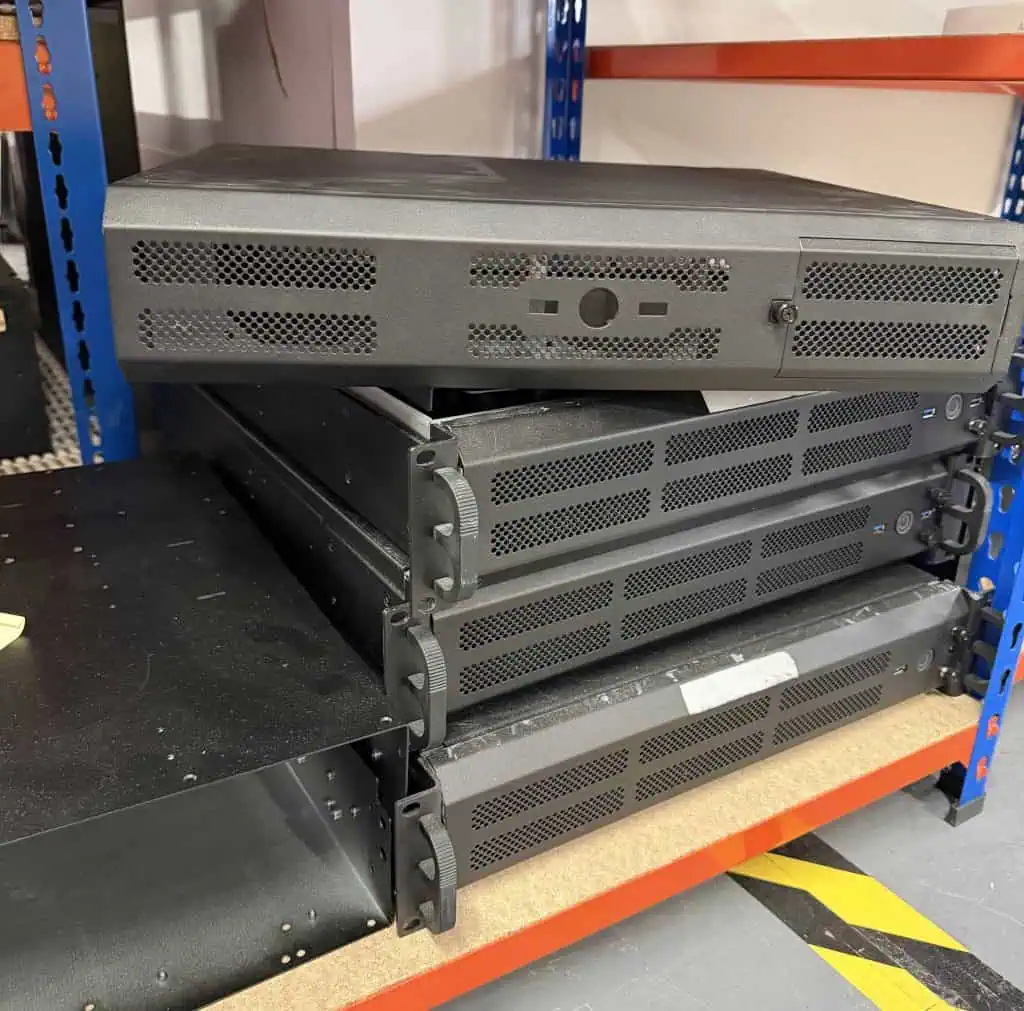
The chassis: First generation 2U Nano — now the 2U PC V2
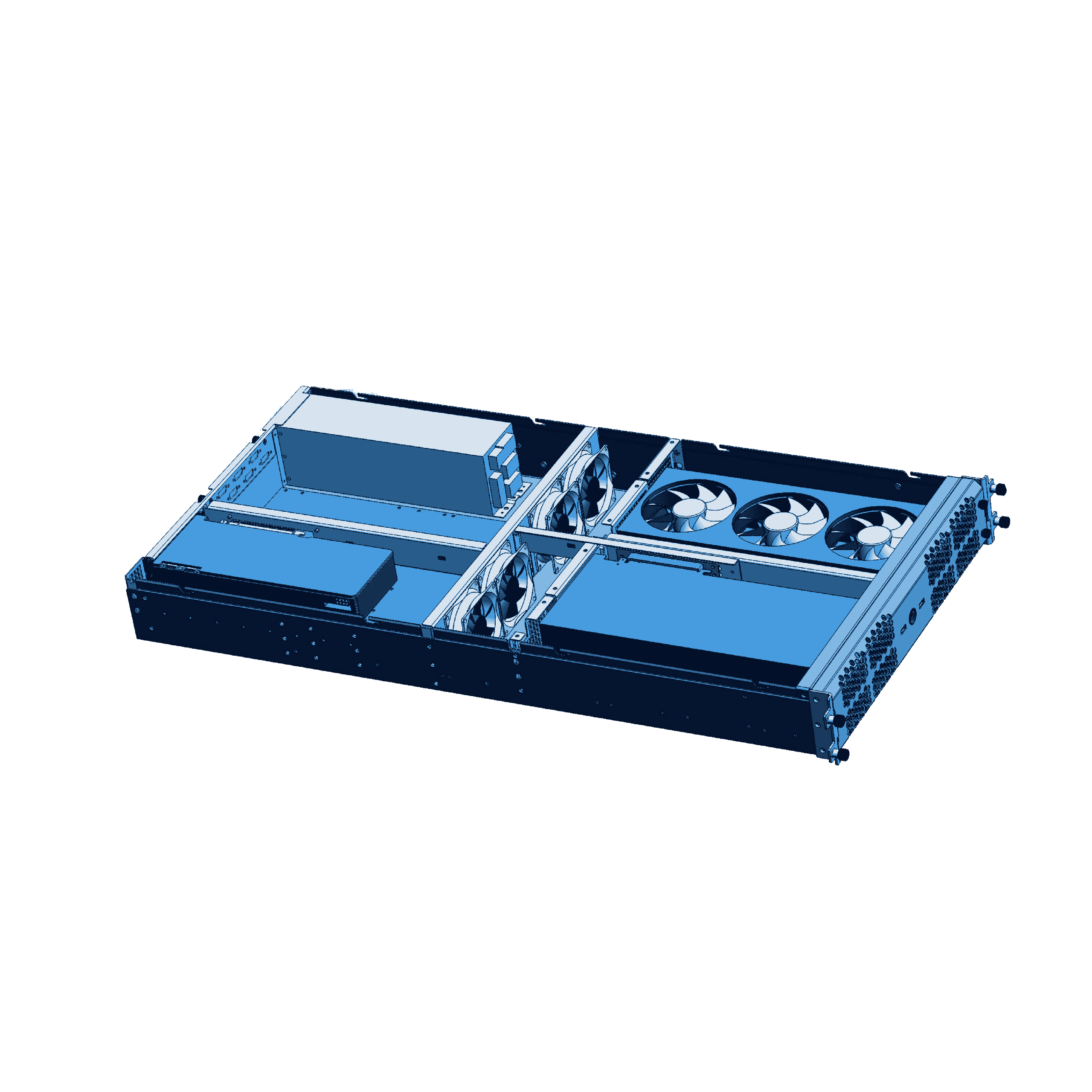
This is the original. The first revision of what we now sell as the 2U PC V2. I personally built the first prototype and many of the production units.
The 2U Nano launched in 2016, compact, rack-mountable, genuinely versatile – it found its way into broadcast installations, live events, theme parks, and everywhere in between. Even Warner Bros studios, powering some big-name projects Harry Potter world and Star Wars. It’s not the most technically demanding, but because it perfectly captures what this chassis is: professional hardware running reliably in an environment where it can’t fail and where nobody in the building knows it’s there. That’s the job done right.
It was later shortlisted for an AV Magazine award, and being recognised by an industry that knows its stuff meant a great deal.
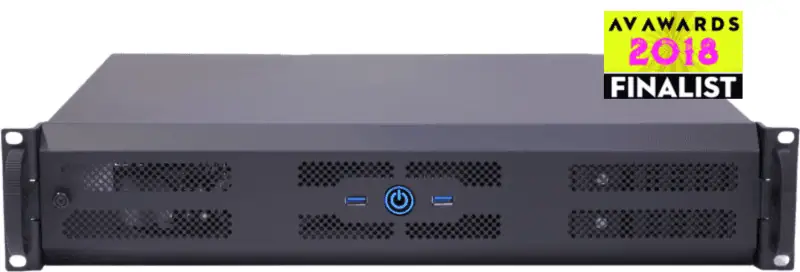
Since that first generation, the product has evolved. We now offer a smaller option for deployments where space is really at a premium. The 2U form factor remains one of our best-selling products, it may be short depth and only 2U but this chassis can swallow a full ATX motherboard 2x 2.5/3.5” HDDs, and multiple PCIe cards. That’s the thing that always gets people, it looks compact on a shelf or in a rack, and then you open it up and realise how much you can fit inside. Despite being a first-generation unit returned from a customer that we later upgraded, it is still completely viable as the foundation for a new build. The outside is old. What goes inside is not.
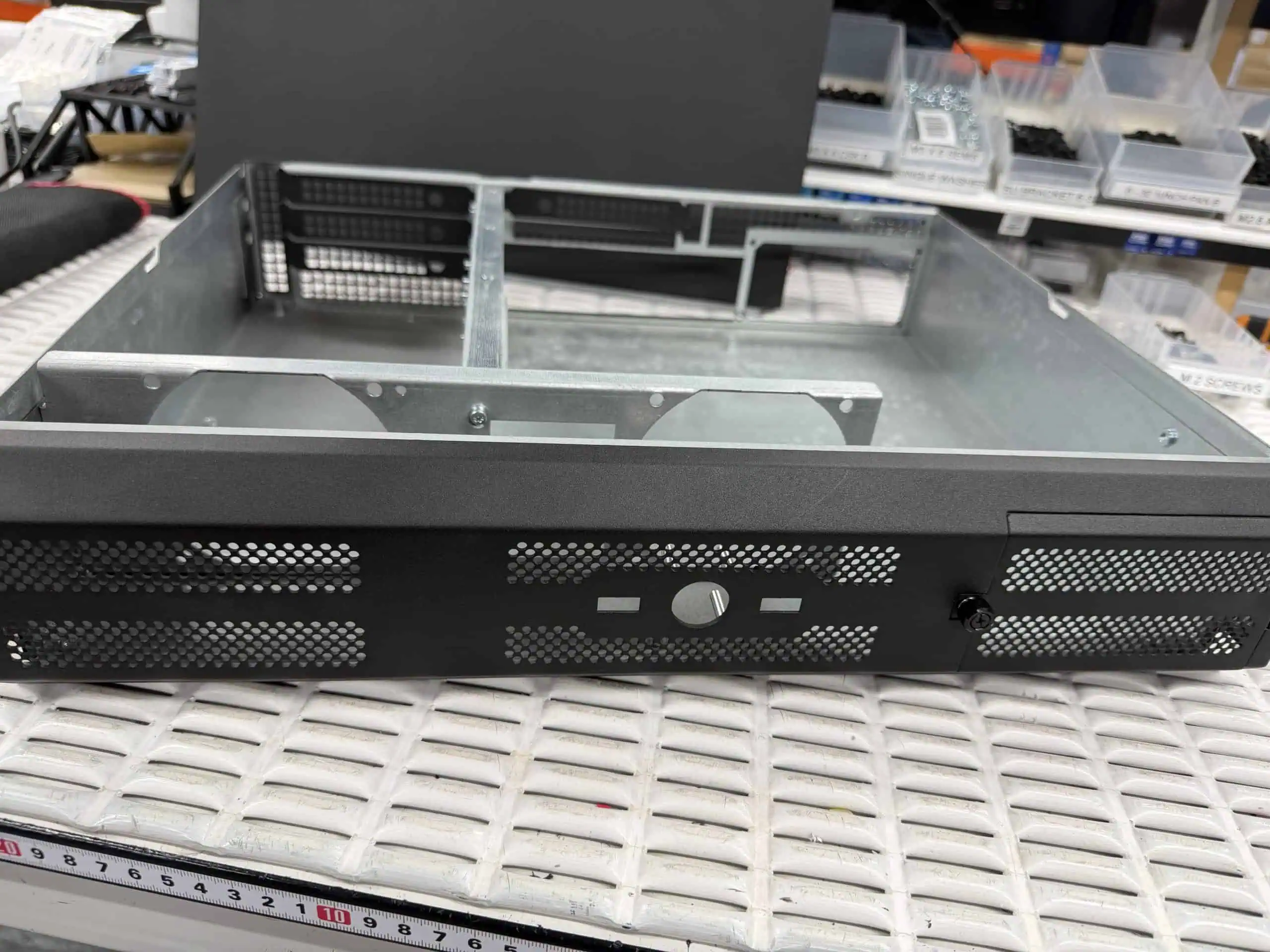
The build
Right. Enough history. Let’s put a computer in it.
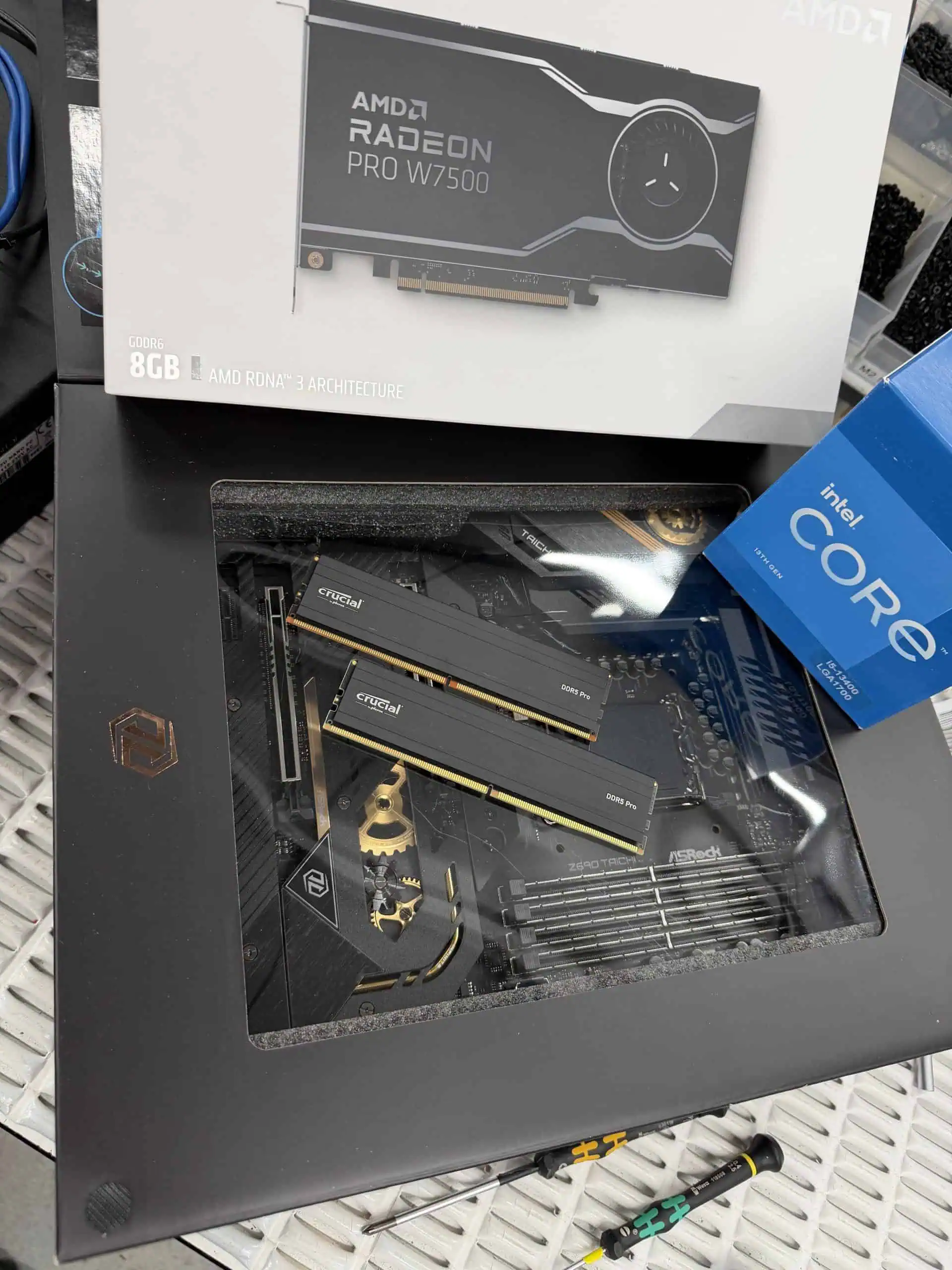
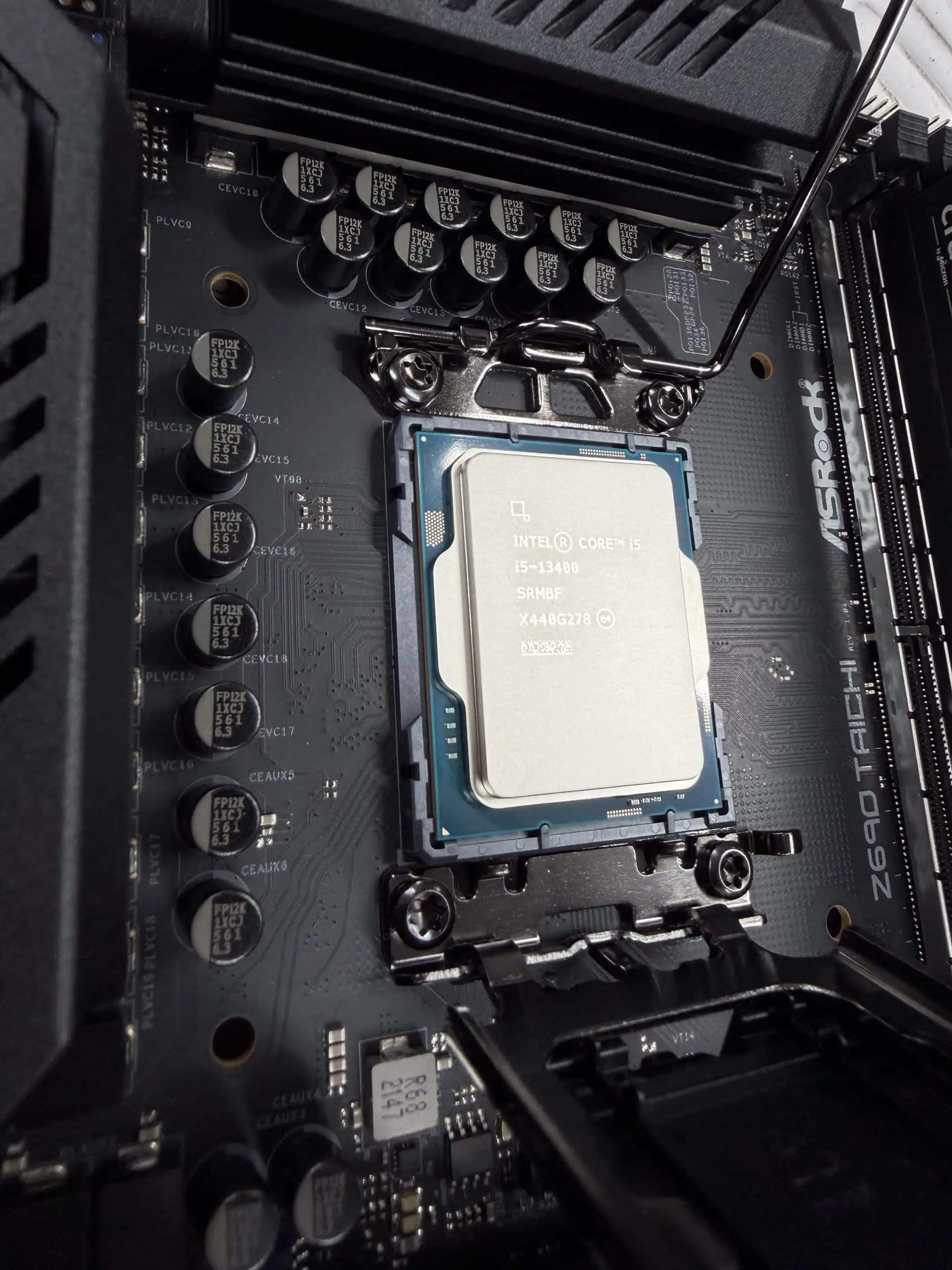
First things first – the CPU, RAM and storage go into the board before anything goes near the chassis. It’s always easier to work on a motherboard when it’s flat on the bench rather than already mounted and at an awkward angle. The i5-13400 dropped into the LGA1700 socket, RAM seated into the correct slots for dual channel, the Crucial P310 NVMe slotted into the M.2 slot, and then the cooler went on with thermal paste applied.
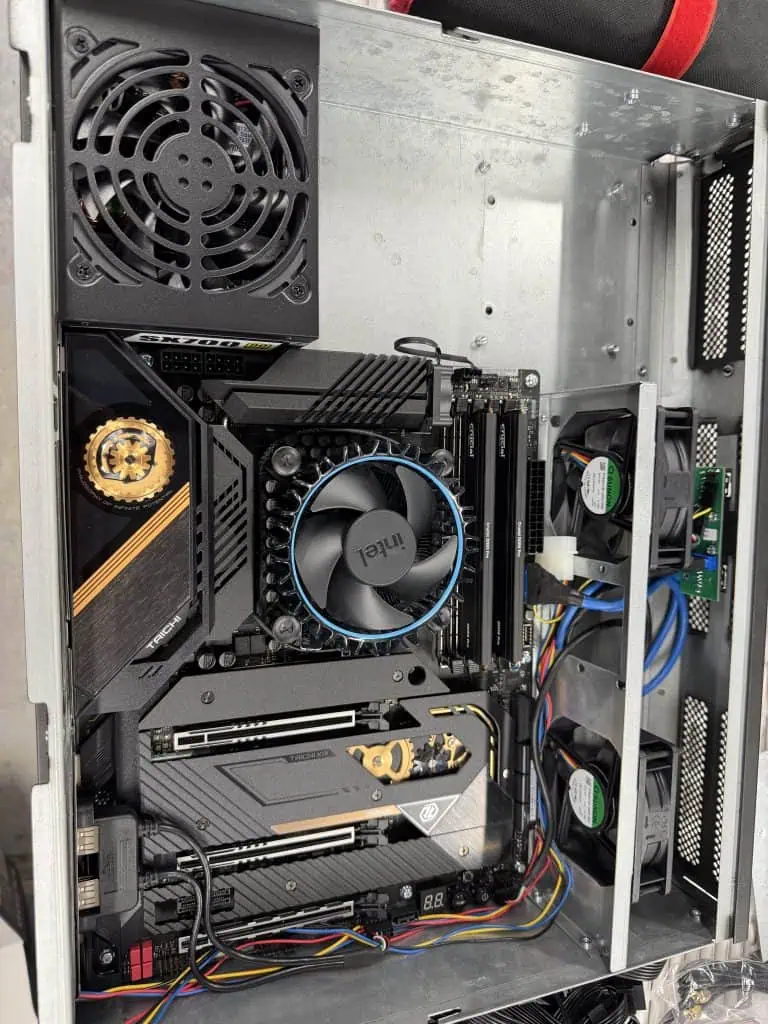
With the board fully populated, it was time to fit it into the chassis. The Z690 Taichi lined up cleanly with the standoffs, snug but secured down without issue.
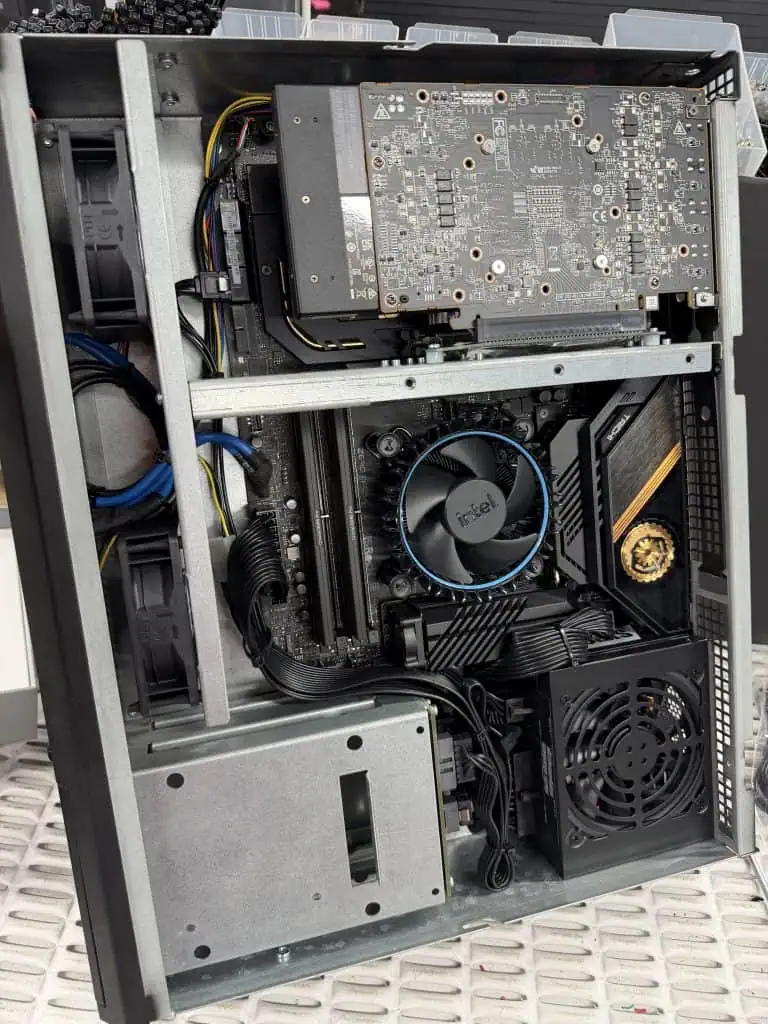
To fit the AMD Radeon PRO W7500, we mounted a PCIe riser cable, this routes the graphics card away from the motherboard slot so it can sit correctly within the 2U form factor. It’s a clean solution and one we use regularly in our own builds, but it’s worth showing because it catches people out if they haven’t seen it before. The W7500 connected up, sitting flush, bracket secured.
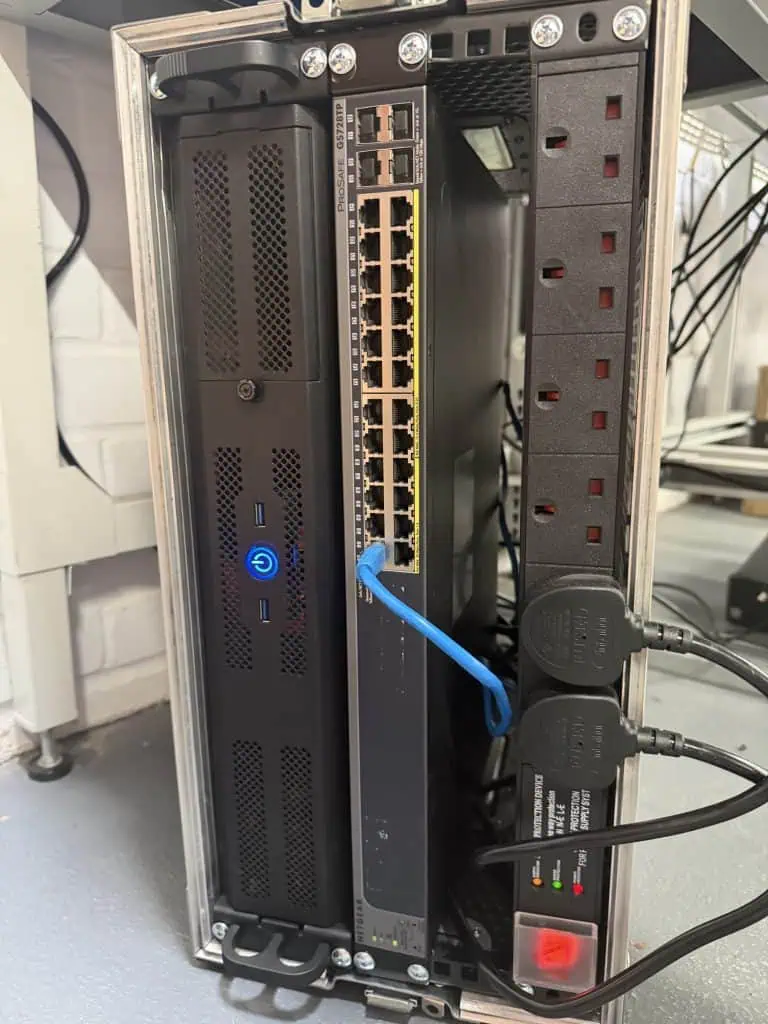
Cabling tidied up, panels back on. The chassis that started life in 2016 and retired after a decade of service has been reborn.
First boot
There is a specific kind of silence in the few seconds between pressing the power button on a new build and what happens next.
It posted first time!
BIOS updated, PXE booted to our deployment environment, Windows Enterprise deployed and drivers installed. Now QC and testing, every machine is tested and QC’d with a suite of stress tests and hardware identifying scripts . It’s all recorded so we can track how it performed, a system designed and created by yours truly.
I won’t bore you with in boring part of installing all my applications, but I can confirm Spotify works. Priorities.
What this proved
This build cost G2 Digital nothing in new purchases. Every component either came from aging stock, a sample shelf, or a returned chassis that was destined to be cannibalised anyway. The total environmental cost of this machine is a fraction of what a fresh build would have generated.
But more than the sustainability argument – which is real, and worth making – this was a reminder that good hardware has a long life if you let it. The 2U Nano chassis is old enough to have a product history and a successor, and it’s still a perfectly good enclosure for a modern build. The Z690 Taichi was a flagship board a few years ago and hasn’t become less capable since. The i5-13400 is off our current product list and absolutely still does the job.
We build things to last. Turns out that applies to our own kit too.
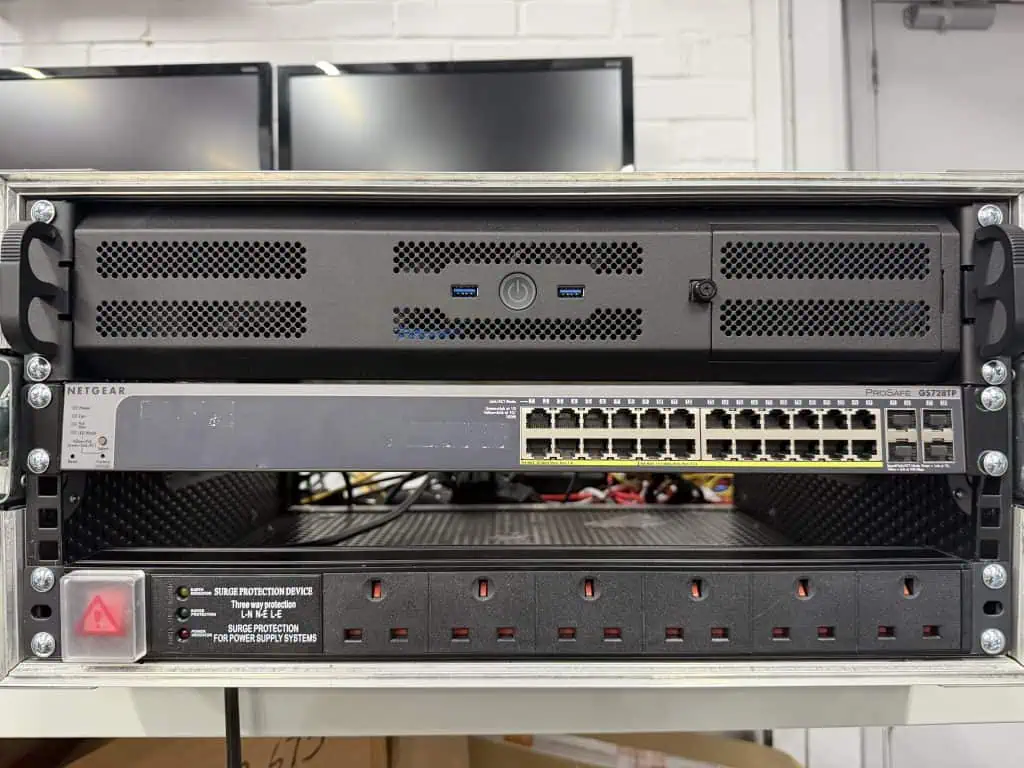
That’s the series. Thanks for following along — and if this has inspired you to look at what’s already in your rack before ordering something new, then it’s done its job.
Interested in the 2U PC V2 or any of the components featured?
 Need a quick answer right now? Chat with us live using the icon at the bottom right of your screen