The Real Cost of Cloud Inference
Building your first AI application in the cloud is easy. Running it at scale is another story. Discover why the economics of modern GPUs are making on-premises AI a practical alternative for production workloads.


The Token Bill Is the New Licence Fee
You built the demo on cloud APIs because the entry cost was minimal. A few pounds, a few hundred API calls, a model that supported what you needed and looked great.
Then your bill arrives.
Independent analyses including Lenovo’s 2026 Generative AI TCO whitepaper and Tilkal’s 2026 cloud versus on-premises cost study put self-hosted inference at up to 18 times cheaper per million tokens than premium cloud APIs under sustained load.
The compute shift that’s already happening
We regularly talk to engineers about waiting for cloud GPUs and price moves between planning cycles.
With on-premises gear, it sits in the rack, runs your workload and costs are fixed when you purchase.
On-premises infrastructure can help organisations meet data and compliance requirements, including GDPR, HIPAA, and SOC 2, while keeping sensitive workloads under their own control.
Cloud round-trips run around 1.5 seconds under normal conditions (BenchLM, 2026). Local inference on current hardware is under 40 milliseconds (Software Tailor, 2026). For computer vision at line speed, live broadcast inference or ROV video analysis, sub-40 millisecond response time is a functional requirement.
Why on-premises AI stalled and why that’s changed
Running a serious LLM locally requires enough VRAM to keep the entire model loaded in GPU memory at once. A 70B parameter model is a large numerical dataset and if your GPU cannot hold all of it, the system swaps parts in and out of slower memory and inference speed drops off a cliff. You also need enough inter-GPU bandwidth to run inference across cards efficiently, and a chassis that manages thermals at sustained load. Until recently, meeting all three meant significant rack space, and most teams ran their production AI on cloud instead.
A 70B parameter model needs North of 140GB of VRAM and a single card tops out at 96GB. Two standard cards reach the memory ceiling and lacks the inter-GPU bandwidth to run inference across them properly.
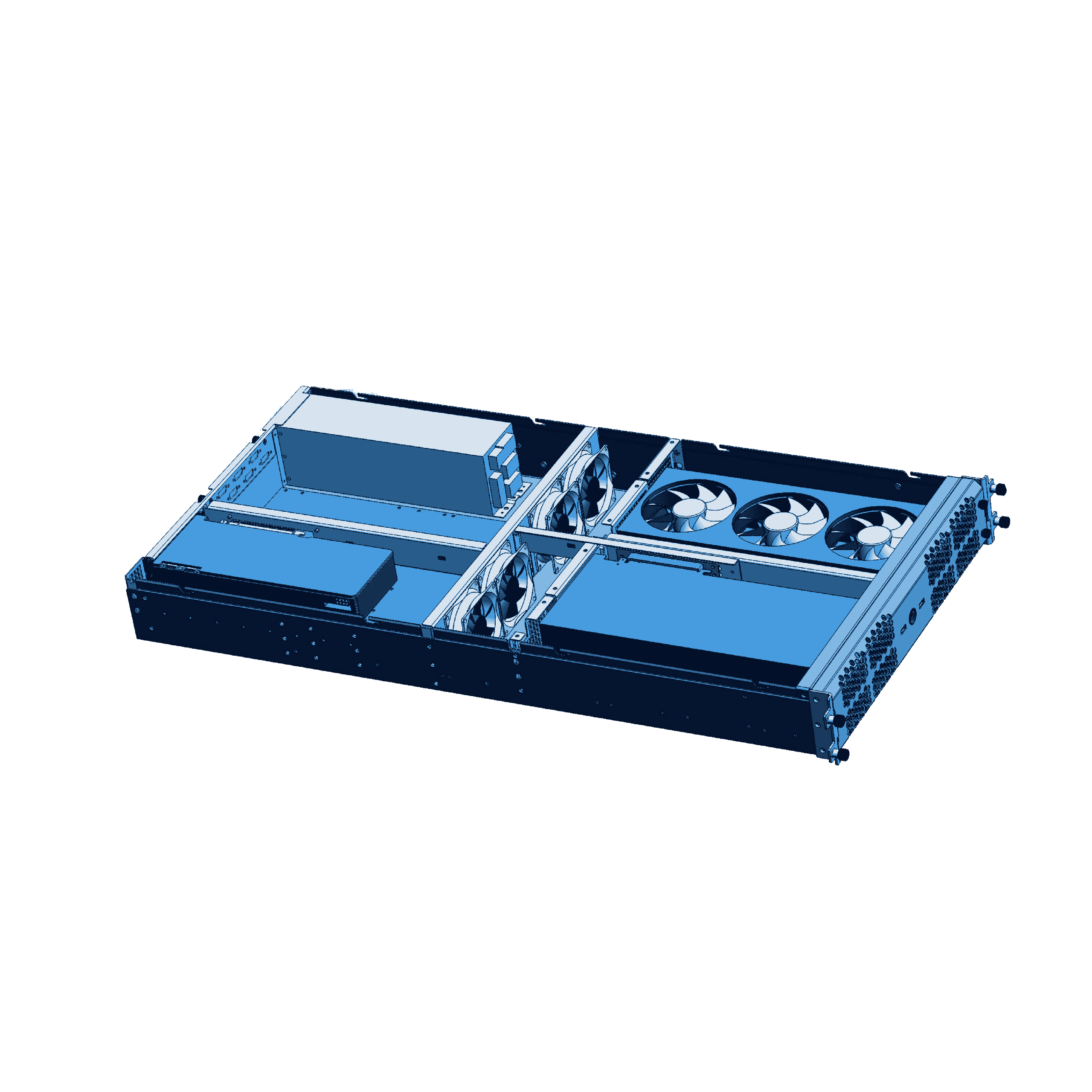
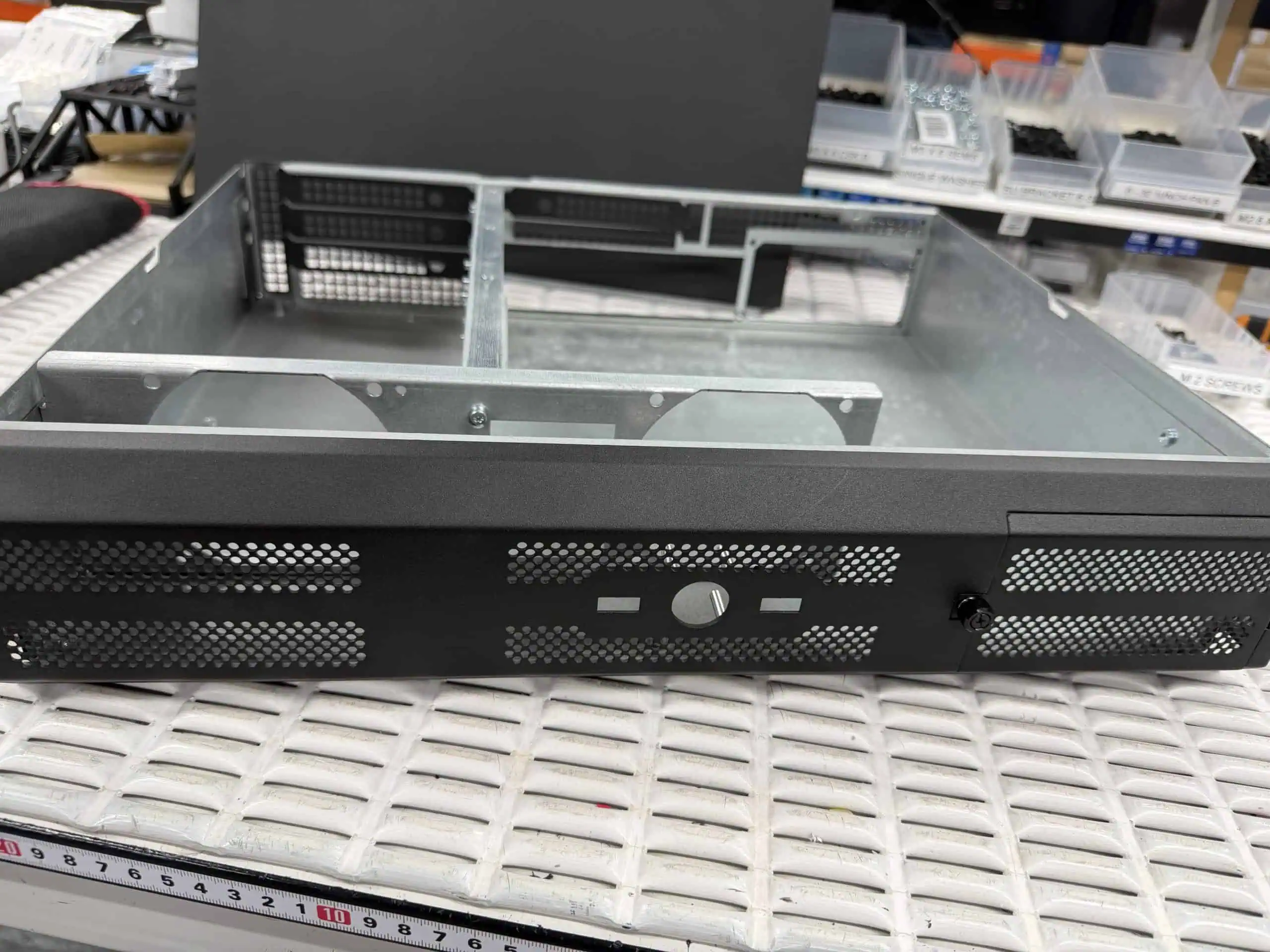
Those now fit in a 2U. Two NVIDIA RTX 5090s deliver 64GB GDDR7 GPU memory in a 2U chassis engineered and tested for sustained GPU workloads. A 70B parameter model needs north of 140GB of VRAM, putting it beyond the capacity of a single 96GB GPU. Multi-GPU configurations solve the memory requirement, but they also introduce challenges around GPU-to-GPU communication, power, cooling and rack density.
The decision is getting simpler
A year ago the on-premises versus cloud decision needed a spreadsheet full of assumptions. Workload growth, hardware longevity, five-year TCO. Those assumptions are turning into data. The crossover point where owned hardware becomes cheaper than equivalent cloud spend is arriving earlier than finance projected and at lower volumes than engineering expected.
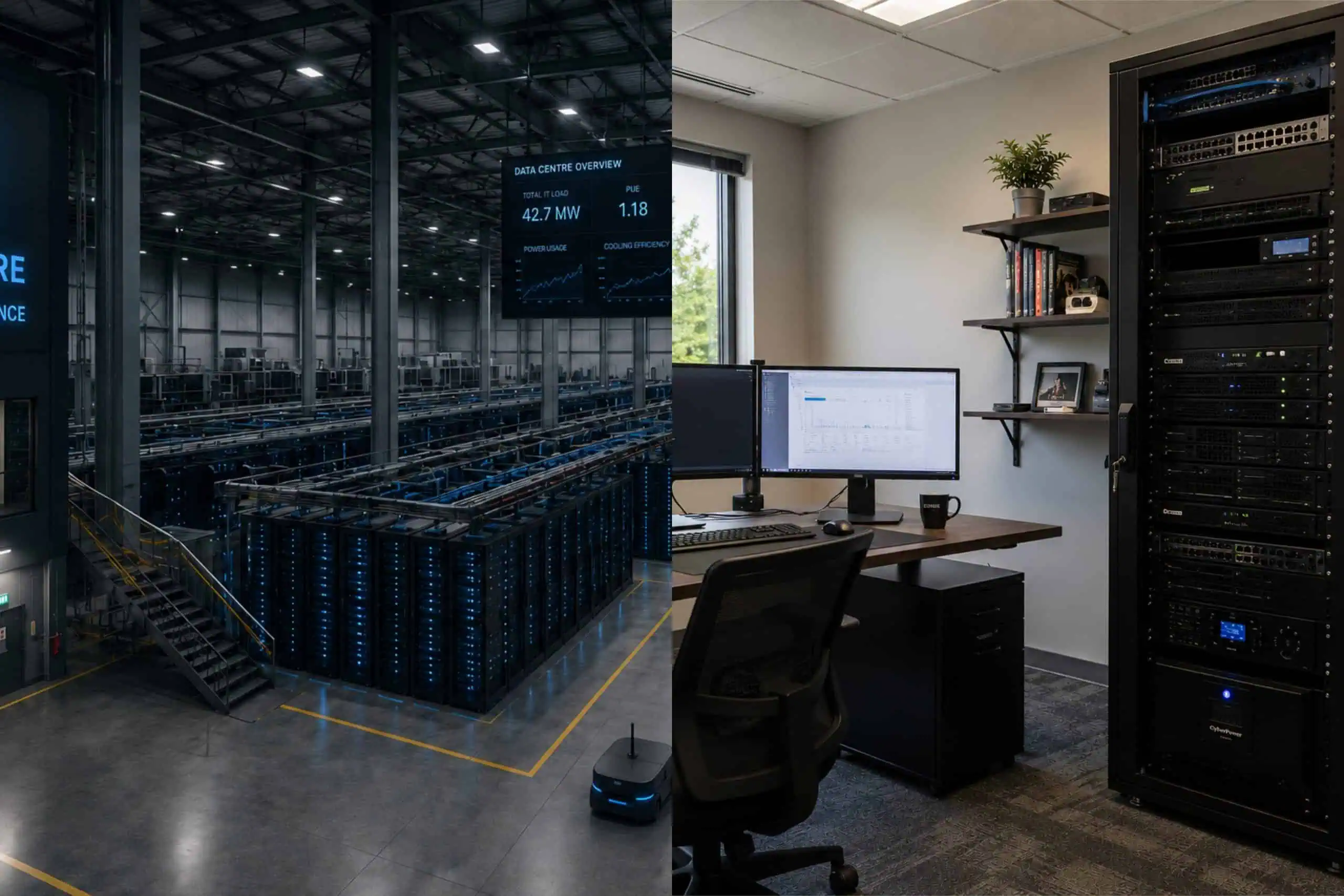
Cloud makes sense for bursty workloads, experiments and where volume is unpredictable. For production AI with consistent workloads, sensitive data and real-time requirements, the economics of owning the hardware can look very different from the economics of running every inference through a cloud API.
Running production AI on cloud and watching the token costs climb? Read how one post-production team moved their 70B model on-premises, cut latency by 97% and put the hardware on a sub-12-month payback → The Cloud Bill: Sam’s Story
View more on the 2U Q-Power, or view the product page here.
What spec do you need? Contact Us
 Need a quick answer right now? Chat with us live using the icon at the bottom right of your screen